
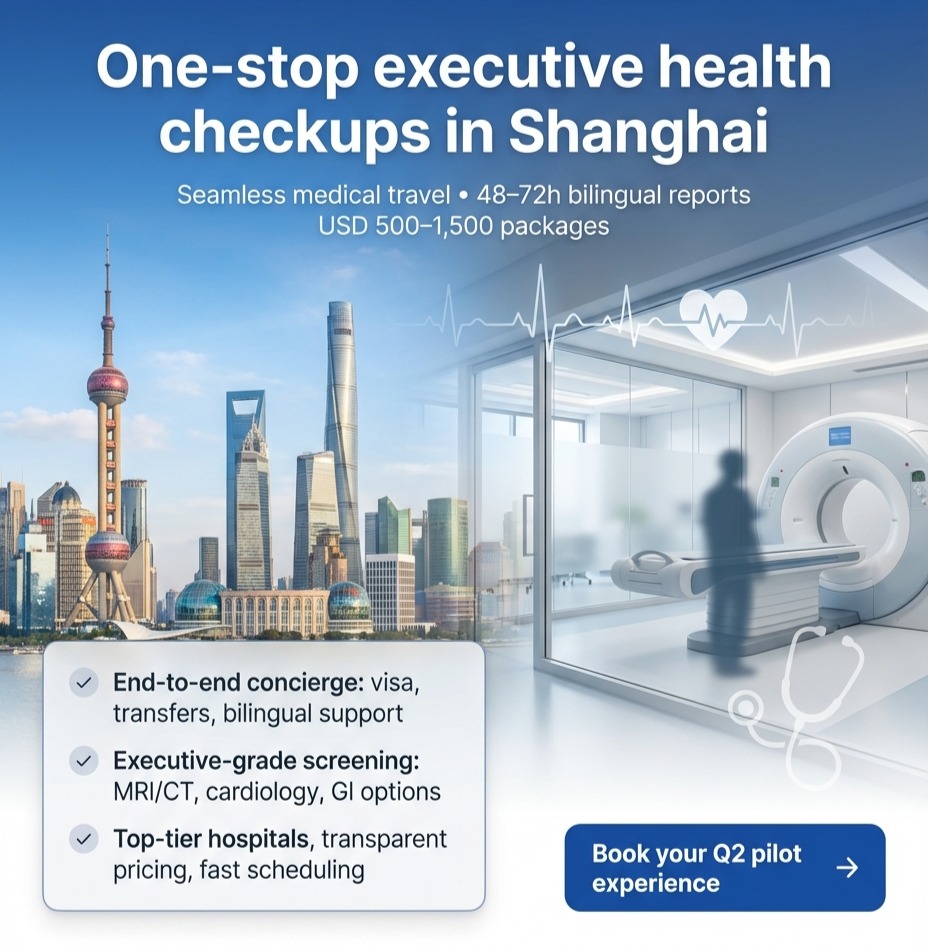
The Global Landscape — Why China Now?
Medical travel is not a new idea. It is a response to a universal human need: the desire for health when local options feel limited. Over the last thirty years of globalization, this industry has evolved from a niche luxury into a strategic necessity for millions of patients. But the map is changing. The destinations that dominated the early era are facing new pressures. And a new contender has emerged—not by copying the past, but by building a different future.
This chapter of the book ” Medical Trip to China” explains where medical travel has been, where it is going, and why China has become the critical alternative for patients seeking speed, technology, and capacity.
The 30-Year Evolution: From Luxury to Necessity
In the 1990s, medical travel was often about cost arbitrage or exotic wellness. Patients traveled for cheaper dental work, cosmetic surgery, or alternative therapies unavailable at home. It was a “Plan B” for the adventurous.
Today, it is different. Medical travel is driven by access. When waitlists stretch into years, when innovative therapies are approved elsewhere but not at home, and when the cost of care threatens financial stability, traveling becomes a rational medical decision. Over three decades, the industry has matured. Standards have risen. Accreditations (like JCI) became common. And patients became smarter—they no longer just ask “How much?” They ask “How soon?” and “How good?”
The Asian Landscape: Established Players vs. New Capacity
For years, Asia has been the hub of global medical travel. Three destinations traditionally led the market, each with a specific strength:
- Thailand: Known for hospitality and cost-effective care.
- Strength: Service culture, tourism integration, competitive pricing for elective procedures.
- Limit: Often focused on wellness, cosmetics, and standard surgeries. Complex, high-risk specialties may require transfer elsewhere.
- South Korea: The global leader in aesthetics and advanced screening.
- Strength: Cosmetic surgery, dermatology, high-end health checkups.
- Limit: Highly specialized in specific fields; less known for complex, multi-system disease management compared to large academic centers.
- Japan: Renowned for precision and cancer screening.
- Strength: Early cancer detection, meticulous service, advanced diagnostics.
- Limit: High cost, language barriers can be rigid, and capacity is limited by an aging domestic population that consumes most resources.
These destinations built strong reputations. But the post-pandemic world introduced a new variable: Saturation.
The Post-Pandemic Pressure Cooker
The global pandemic strained healthcare systems everywhere. Backlogs formed. Elective surgeries were delayed. Staff burnout increased. In many Western countries, the recovery has been slow.
- In the UK: Over 7.3 million people are waiting for routine treatment. 190,000 have waited more than a year.
- In the US: Cost remains a primary barrier, with medical debt affecting millions.
- In Traditional Medical Tourism Hubs: Capacity is tightening. As domestic populations in Japan and Korea age, their own healthcare demands are rising, leaving less surplus capacity for international patients. Thailand remains strong, but for complex, high-acuity conditions (like advanced oncology or cardiac surgery), patients often seek larger-scale academic centers.
This saturation creates a bottleneck. Patients are stuck between high cost (US), long waits (UK/Europe), and limited complex care capacity (traditional hubs). This gap is where China enters the equation.
The China Advantage: Incremental Growth & Scale
China’s healthcare system did not start as a medical tourism destination. It started as a domestic necessity—building capacity to serve 1.4 billion people. This scale created a unique advantage: Incremental Growth.
While other systems were managing decline or stagnation, China was building. This is not just about building hospitals. It is about building an ecosystem.
1. The Talent Pipeline
Medical care is ultimately about people. China produces a vast number of medical graduates annually. This volume creates a deep bench of talent.
- High-Volume Proficiency: Because of the population size, specialists in top Chinese hospitals see cases at a volume unmatched in the West. A cardiac surgeon in Beijing may perform hundreds of complex bypass surgeries annually. In the West, that same surgeon might do dozens. Repetition creates proficiency. You are being treated by masters of their craft who have seen every variation of your condition.
- Global Training: Many leading Chinese physicians trained in the West (Harvard, Mayo Clinic, Johns Hopkins) before returning to lead departments. They speak your language. They understand your expectations.
2. The Full Industry Chain
Medical technology requires manufacturing. China has developed a complete industrial chain for medical devices and pharmaceuticals.
- Domestic Innovation: In 2024 alone, over 60 novel drugs were approved in China. Companies are engaging in major out-licensing deals with Western pharma giants for homegrown therapies.
- Cost & Access: The national volume-based procurement system dramatically lowers the cost of high-end medical devices and drugs. This accelerates domestic adoption. What is expensive elsewhere becomes accessible here.
3. Technology & AI: The New Frontier
This is perhaps the most significant differentiator. China is not just adopting Western technology; it is integrating it at a systemic level.
- AI in Diagnostics: Consider the PANDA AI tool developed with Alibaba. It analyzes noncontrast CT scans to detect pancreatic cancer with 93% accuracy. In clinical trials at Ningbo University Affiliated People’s Hospital, it processed over 180,000 CT scans, detecting early-stage cancers that humans missed. This is not a pilot project. It is a deployed system saving lives now.
- Stem Cell & Regenerative Medicine: China leads global stem cell diabetes research, hosting 47 of 143 registered clinical trials (33.3%) worldwide. Landmark studies published in Cell have documented sustained insulin independence in Type 1 diabetes patients following stem cell transplantation. For conditions where Western options are limited to management, China offers pathways to functional cure.
- Surgical Robotics: The “Tianji” orthopedic surgical robot, developed by Academician Tian Wei at Beijing Jishuitan Hospital, enables minimally invasive spine surgeries with precision that reduces recovery time. This is homegrown innovation competing with global leaders.
The Dual-Engine Future: US Tech + China Scale
For decades, the narrative was one-way: technology flowed from the West to the Rest. That era is over. Today, we see a dual-engine model:
- The US Engine: Still leads in basic research and novel drug discovery. It remains the gold standard for innovation origination.
- The China Engine: Leads in application, scale, and speed. It excels at taking proven concepts, refining them, and deploying them rapidly across a massive population.
For the medical traveler, this means China is no longer just a “cheap alternative.” It is the only choice besides the US for access to certain cutting-edge therapies (like specific CAR-T protocols or stem cell trials) — often at a fraction of the cost and with significantly faster access.
What This Means for You
Why does this macro analysis matter to your health journey? Because it validates your decision.
- You are not taking a risk on “undeveloped” care. You are accessing a system that has invested trillions in infrastructure over 30 years.
- You are not settling for less. You are choosing a system that leads in specific frontiers like AI diagnostics and regenerative medicine.
- You are solving the capacity problem. While others wait, China’s incremental growth means there is room for you.
Medical travel to China is not only a Plan B for uncertainty. It is an upgrade service for specific medical care. It is the intersection of Western-trained expertise, Eastern efficiency, and next-generation technology.
The global landscape has shifted. The question is no longer “Why China?” The question is “Can you afford to wait elsewhere?”
 DrHerbs